
Vivian Bullwinkel
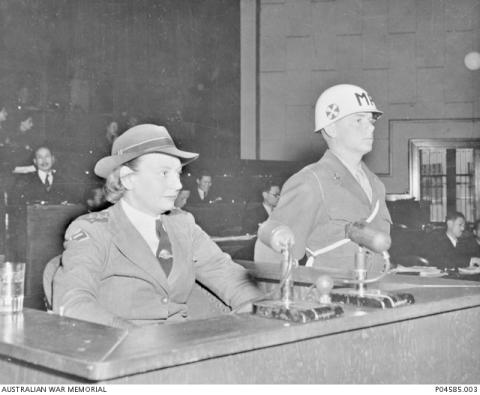
Australian army nurses prisoners
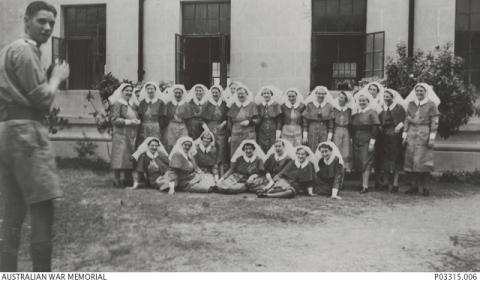
In An Attractive Naivety, Armistice Darcy, a character inspired by Australian nurse, Betty Jeffrey, is one of 65 Australian army nurses evacuated from Singapore on 12 February 1942, just before its fall, on the SS Vyner Brooke. The following day, Friday the 13th, the ship was attacked by six Japanese bombers and sunk. Of those who made it to shore, 21 were savagely raped and murdered by Japanese soldiers on Radji Beach, Bangka Island.
An Attractive Naivety: Australia as a new nation in a complex world (Revised Edition)
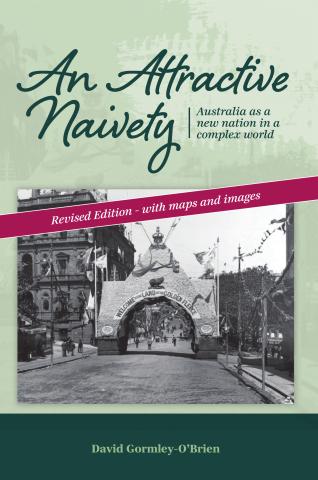
Author: David Gormley-O'Brien
Revised Edition: February 2026
ISBN: 978-1-923122-86-4
Paperback RRP: $25.00
Kindle e-book: $11.99 on Amazon
Kobo/Google Play epub file: $11.99
An Attractive Naivety is a historical novel of war, identity, and endurance, set against Australia’s first half-century as a nation.
At the dawn of the twentieth century, Australia is newly federated – ambitious, proud, and unsure of itself. The novel traces that coming of age through the lives of ordinary people caught up in extraordinary events. From plague-stricken Sydney to the battlefield of Palestine, from the Cowra Breakout to the building of the Sydney Harbour Bridge, it follows the pressures that shaped both private lives and public myths.
Fictional characters move alongside real figures and documented events. David Gormley-O’Brien turns his attention away from the usual centres of power to the margins that sustained the country – ratcatchers and tram drivers, nurses and labourers, unionists and returned soldiers. These are lives rarely foregrounded, yet essential to the national story.
Their struggles are practical and human. A young widow raises a child after the plague. A family is divided by class, shame, and loyalty. A boy knits socks for soldiers while his brother avoids the front. A nurse, inspired by Florence Nightingale, becomes a prisoner in a Japanese internment camp deep in the jungle. A labourer risks his life on the Harbour Bridge to feed his family. A tram-driver returns from war carrying the weight of his role as a guard during a violent mass breakout.
Grounded in careful research and rendered with close attention to period detail, the novel examines the contradictions of nation-building – idealism and inequality, duty and prejudice, pride and grief. Language and attitudes are presented as they were, without modern varnish, but with care.
For readers of serious historical fiction, An Attractive Naivety offers a measured, intimate portrait of Australia in the making, and of the people who bore its costs.
Revised Edition (2026) with maps and images.