
British Commonwealth Occupation Force
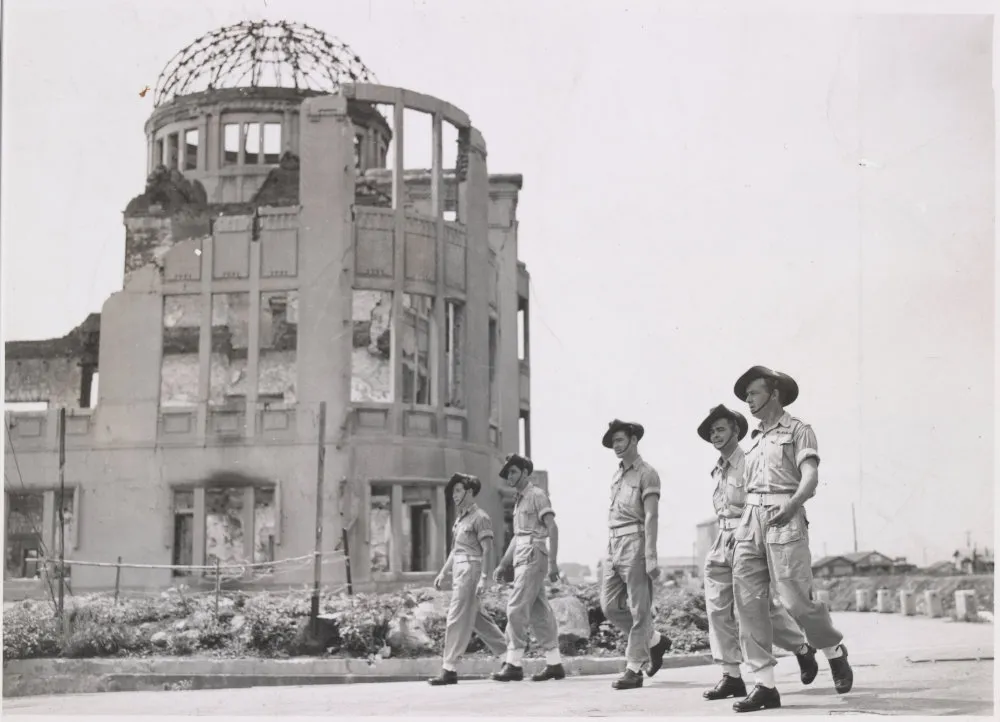
From 1946 to 1952, the British Commonwealth Occupation Force (BCOF) helped rebuild and govern western Japan after the Second World War. Thousands of Australian servicemen, nurses and their families were part of this remarkable but often overlooked chapter in Australia's history.
The Australian Military Contribution to the Occupation of Japan, 1945-1952
On 13 February 1946, Australian troops, the vanguard of a 37,000-strong British Commonwealth Occupation Force (BCOF), disembarked at the war-devastated Japanese port city of Kure, almost four years to the day (15 February 1942) after Singapore, the bastion of the British Empire in the Far East, surrendered to the Japanese Army. At its peak, there were some 12,000 Australians serving in BCOF.
The Forgotten Force - Australia's role in Post-war Japan
Interviews of exservicemen and women who served with BCOF. Based on James Wood's book.
Fraternising with the Enemy: The British Commonwealth Occupation Force and its Interactions with Japanese Citizens, 1946 – 52
This thesis examines the relationships between Australian troops of the British Commonwealth Occupation Force (BCOF) and Japanese citizens during the Allied Occupation of Japan following World War Two (1945 – 1952). Literature regarding the Allied Occupation of Japan largely focuses on the United States and its role in the development of post-war Japan’s politics and foreign relations. This extends to social and cultural histories, which focus on the fraternisation involving American GIs. The BCOF was, in contrast ‘the forgotten force’. In comparison to the United States, the BCOF established strict guidelines towards fraternisation.
However, this thesis argues that these guidelines did nothing to stop fraternisation with the local Japanese population. Using archival evidence, memoirs, media and existing research, this thesis analyses and discuss Australian troops and their interactions with Japanese citizens.
Ashes and Sakura: an Australian story of the making of a Pacific nation
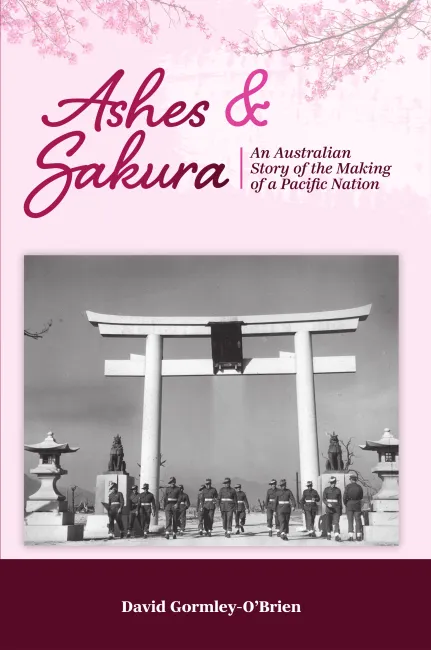
Set against the remote Pacific island of Morotai and the ruins of postwar Japan at war’s end, Ashes and Sakura follows Tom Darcy, a young Australian soldier serving with the British Commonwealth occupation forces in Japan after the Second World War. As he encounters the devastation of a defeated nation and forms unexpected bonds with those on the other side of the conflict, the novel explores war, memory, love and reconciliation.
Occupation of Japan - British Empire Force
Lieutenant-General Northcott said the British Commonwealth Occupation Force in Japan would have significant responsibilities, including supervising the disposal of Japanese war materials and directing Japanese labour. He praised the high standard of Australian troops and said details of the force's duties would soon be announced, with its responsibilities to be determined under General MacArthur's command.
Occupation force's activities
Lieutenant-General Northcott reported that the British Commonwealth Occupation Force had made significant progress during its first two months in Japan. Its work included restoring essential services, repairing ports and airfields, employing thousands of Japanese labourers, recovering military stores, improving communications, and locating munitions for destruction, while demonstrating the effectiveness of Commonwealth cooperation.