
Post-war Asia
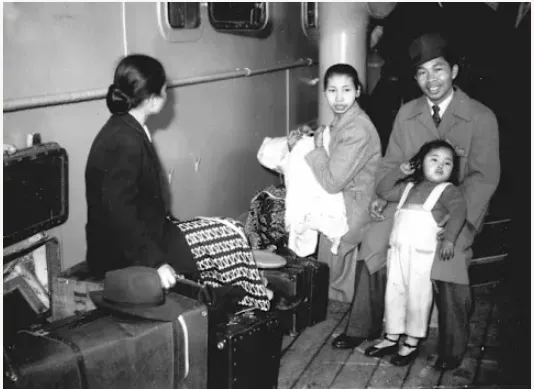
The Second World War marked the beginning of a new era in Australia’s relations with Asia. This topic explores the occupation of Japan, the war crimes trials, the end of European colonialism, the Indonesian Revolution and Australia’s growing role in the region.
War Crimes Trials on Morotai Island - WW2TV (video)
The 'Black Armada' - Australian boycott of Dutch ships in 1945
Australia's first war crime trials
Ashes and Sakura: an Australian story of the making of a Pacific nation
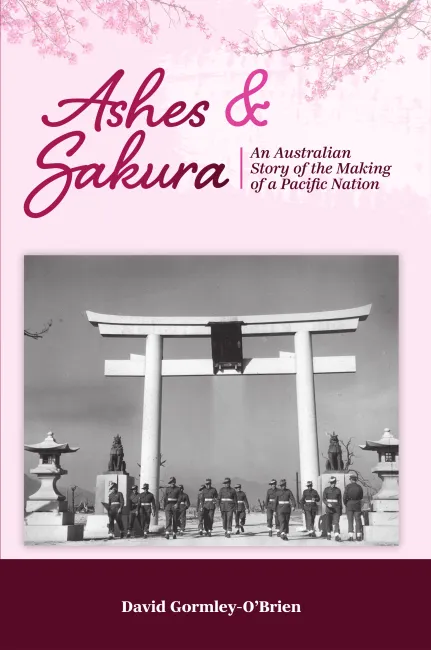
Set against the remote Pacific island of Morotai and the ruins of postwar Japan at war’s end, Ashes and Sakura follows Tom Darcy, a young Australian soldier serving with the British Commonwealth occupation forces in Japan after the Second World War. As he encounters the devastation of a defeated nation and forms unexpected bonds with those on the other side of the conflict, the novel explores war, memory, love and reconciliation.
Pacific reckoning - Australian war crimes trials (video)
NATIVE RIOTS IN JAVA
The article reports growing unrest in Batavia following Japan's surrender, as Indonesian nationalists demanded an independent republic under Soekarno. Indonesian demonstrators attempted to enter the Tjidang women's internment camp, which was defended jointly by Allied personnel and Japanese guards. The article describes increasing displays of the new Indonesian red-and-white flag, political demonstrations and violence, while Japanese forces remained temporarily responsible for maintaining order.
Black ban on dutch mercy ships
NEI Information Service deny that supplies for the suppression of the Indonesian people were carried aboard Dutch ships in Australian ports.
Emotional scenes as Indonesians leave for home on the Esperance
Indonesian dockworkers and seamen who worked in Australia during the war embark on the Esperance Bay to be taken to Java.
Esperance Bay leaves Brisbane
Esperance Bay leaves Brisbane with >1400 Indonesians destined for Java at the end of the war.
Esperance Bay Enquiry Urged
Faddin demands that Chifley open an inquiry into a mutiny on the Esperance Bay
The Esperance Bay Mutiny - allegations of smuggled arms
Allegations by Daily Mail correspondent that Indonesians smuggled arms on board Esperance Bay.
Esperance Bay 'Double Cross'
Esperance Bay docks at Timor as Mountbatten is unable to ensure safe conduct in Java for 40 activist Indonesians on board despite assurances from Australian government.
Esperance Bay Story Denied
Calwell denies that the Indonesians protest on the Esperance Bay was a mutiny - no lives were in danger.
Trouble On Esperance Bay Explained
Indonesians aboard Esperance Bay protested when 40 potential leaders were compelled to disembark in Timor rather than Java.
NO MUTINY ON ESPERANCE BAY
K. Plumb, government minister who travelled on Esperance Bay, denies that a mutiny took place at Timor.
Indonesia calling - Joris Ivens, 1946
Indonesia Calling is a 1946 Australian short documentary film directed by Joris Ivens and produced by the then Waterside Workers' Federation.
Occupation of Japan - British Empire Force
Lieutenant-General Northcott said the British Commonwealth Occupation Force in Japan would have significant responsibilities, including supervising the disposal of Japanese war materials and directing Japanese labour. He praised the high standard of Australian troops and said details of the force's duties would soon be announced, with its responsibilities to be determined under General MacArthur's command.
Dutch Boycott Stupid
Two Labor members returning from NEI see that the black ban on Dutch shipping is harming Indonesian natives and Dutch civilians.
Occupation force's activities
Lieutenant-General Northcott reported that the British Commonwealth Occupation Force had made significant progress during its first two months in Japan. Its work included restoring essential services, repairing ports and airfields, employing thousands of Japanese labourers, recovering military stores, improving communications, and locating munitions for destruction, while demonstrating the effectiveness of Commonwealth cooperation.
Boycott of Dutch ships - requested to continue
Indonesian premier will not ask Australian unions to lift ban on Dutch shipping until the Netherlands stops the economic blockade of Indonesia
Dutch Ships Again Black
A temporary ban on two Dutch ships imposed in Brisbane and Adelaide.
Boycott on Dutch Ships encouraged to continue
Third Congress of Indonesian Railway Labourers request Australian black ban on Dutch shipping to continue.
Dutch boycott reception
Dutch minister to Australia boycotted reception celebrating third anniversary of founding of Indonesian Republic.
Seamen will boycott Dutch ships
Mass meeting of Seamen's Union in Melbourne vote to continue black ban of Dutch shipping.
Black Armada by Rupert Lockwood
Book review