
Raymond Westerling
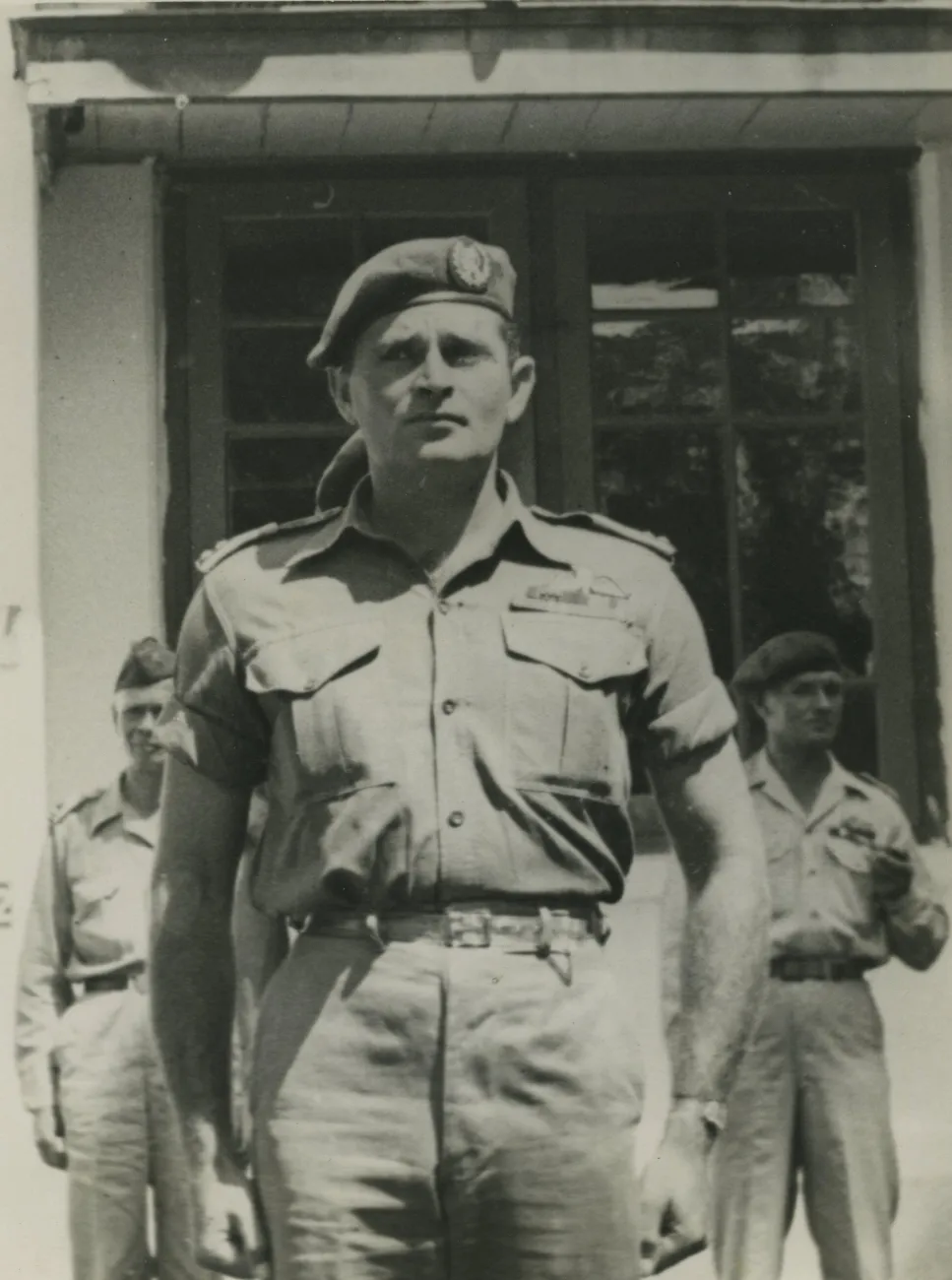
Captain Raymond Westerling (1919–1987) was a Dutch military officer who led counter-insurgency operations during the Indonesian National Revolution. Admired by some for restoring order but condemned by others for the summary executions carried out under his command, he remains one of the most controversial figures in the history of the conflict.
Beyond the pale: Dutch extreme violence in the Indonesian war of independence 1945-1949
Between 1945 and 1949, Indonesia defended its recently declared independence, and the Netherlands waged its last major colonial war. Much is now
known about this war, but a great deal has also remained unclear or contested. At the end of 2016, the second Rutte cabinet decided to finance a broad-based study on the Dutch military conduct during this conflict. This book presents the conclusions of that study.
Challenge to terror
Raymond Westerling’s Challenge to Terror is his account of his military career in the Netherlands East Indies during the Indonesian struggle for independence. It describes his counter-insurgency operations in South Sulawesi and Sumatra, including the controversial methods used by forces under his command against suspected Republican guerrillas. Written from Westerling’s own perspective, the book presents his justification for these methods and his interpretation of the violence and political upheaval surrounding the Indonesian Revolution.
Ex-commando said to aid terrorists
A report from Bandung announces that former Dutch commando officer Captain Raymond Westerling had taken command of the APRA militia, despite lingering controversy over allegations that troops under his command had killed thousands in South Celebes.
Army defy the State
This report describes Raymond Westerling's demand that the newly formed United States of Indonesia recognise his 20,000-strong APRA militia as Pasundan's official army. It highlights the political tensions surrounding his challenge to the Republican government and fears that his force could spark renewed conflict in West Java.
Threat backed by 'Army'
Australian journalist Denis Warner profiles Raymond Westerling as a feared and enigmatic former Dutch commando whose private army posed a serious threat to the newly independent Indonesian government. The article explores his reputation, alleged military strength and the growing fears that he could trigger renewed conflict in West Java.
Westerling Gains His Freedom
The newspaper article reports the departure of Raymond "Turko" Westerling from Singapore for England after Indonesia's attempt to extradite him failed. The article explains that the Singapore Supreme Court ruled the Anglo-Netherlands Extradition Treaty did not apply to the newly independent Republic of Indonesia, leading to his release and deportation. It also notes that Westerling had received lucrative offers for his life story and film rights, highlighting the international publicity surrounding his controversial career.
The buccaneer hid in a hole in the floor
The TIME magazine article recounts the dramatic capture of Captain Raymond "Turk" Westerling at a country house near Amsterdam after Dutch police discovered him hiding beneath the floorboards. It outlines his role in leading an anti-Indonesian guerrilla force following Dutch recognition of Indonesian independence, his years as a fugitive, and the surprising decision of a Dutch magistrate to release him despite government efforts to keep him in custody.