
Tokyo War Crimes Trials

The Tokyo War Crimes Trials (1946–1948) brought leading Japanese political and military figures to justice after the Second World War. Australia played a significant part through its judges, prosecutors and occupation forces, contributing to one of the most important international tribunals of the twentieth century.
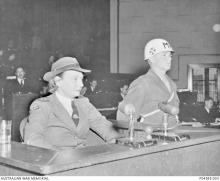
Who was Vivian Bullwinkel?
Ashes and Sakura: an Australian story of the making of a Pacific nation
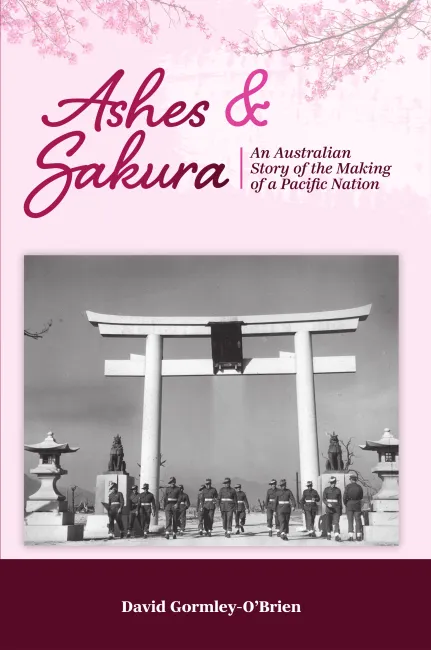
Set against the remote Pacific island of Morotai and the ruins of postwar Japan at war’s end, Ashes and Sakura follows Tom Darcy, a young Australian soldier serving with the British Commonwealth occupation forces in Japan after the Second World War. As he encounters the devastation of a defeated nation and forms unexpected bonds with those on the other side of the conflict, the novel explores war, memory, love and reconciliation.
Interpretation at the Tokyo War Crimes Tribunal: An Overview and Tojo's Cross-Examination
The International Military Tribunals at Tokyo and Nuremberg were established immediately after the Second World War. Interpreting at the Nuremberg Trial has been described in numerous articles and books and is widely regarded as the origin of simultaneous interpreting. By contrast, historical and political science publications have rarely discussed interpreting at the Tokyo Tribunal, except to criticise its inadequate quality.
Drawing on interviews and trial records, this study first presents an overview of interpreting at the Tokyo Tribunal. It then examines in greater detail the interpretation of the cross-examination of Hideki Tojo, who was tried for his prominent wartime role as Minister of War and prime minister and was sentenced to death by the court.
Australians to give evidence at Jap trials
Fourteen Australians, including former prisoners of war and military personnel, were selected to travel to Tokyo to give evidence before the International War Crimes Tribunal. Witnesses included Sister Vivian Bullwinkel, survivor of the Banka Island massacre, and survivors of the Thailand–Burma Railway and the Sandakan–Ranau death march, who would testify about Japanese wartime atrocities.