
Palembang (Sumatra)
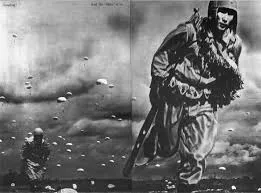
Palembang is a city in southern Sumatra whose oil refineries and strategic airfields made it a major target during the Japanese invasion of the Dutch East Indies in February 1942.
Houses probably at Pladjoe Baroe - BPM refinery
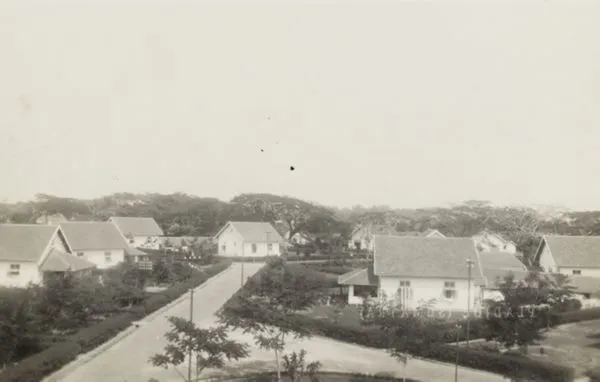
Houses probably in the new European estate at Pladjoe Baroe
Dutch East Indies diaries and personal documents: EB van Dam
Diary February 13, 1942 - January 8, 1945 of Mr. EB van Dam (March 15, 1899 - October 7, 1970)
The BPM employee in Pladjoe, Emanuel Benjamin van Dam (Groningen, 1899), was interned in the Mulo school in Palembang in April 1942, in the Prison in Palembang from April 15, 1942, and in January 1943 in Poentjak Sekoening in Palembang. From September 1943 in the Prison in Muntok and from March 1945 in Belalau. In September 1945, he was transferred to hospitals in Johor Baru and Singapore.
Interview with Mamie Freda Colley
British civilian teacher served as Queen's Army Schoolmistress with Army Education Corps in GB, Germany and Singapore, Malaya, 1926-1942; internee in Muntok Internment Camp, Bangka Island, Bukit Besar, Irenelaan and Poentjak Sekoening Barracks Internment Camps, Palembang and Loeboek Linggau Internment Camp, Sumatra, Dutch East Indies, 2/1942-9/1945
The invasion of the Dutch East Indies
Between 1966 and 1980, the War History Office of the National Defense College of Japan published the 102-volume Senshi Sōsho (War History Series). These volumes give a detailed account of the operations of the Imperial Japanese Army and the Imperial Japanese Navy during the Second World War. This book, vol. 3 of the series, describes in depth the campaign to gain control over the Indonesian archipelago. (copyright: the Corts Foundation)
Battle for Palembang
An account of the Allied defence of Palembang, Sumatra, against the Japanese invasion in February 1942, focusing on the strategically vital Pladjoe and Soengei Gerong oil refineries, the Japanese airborne assault, and the desperate Allied attempts to defend and destroy the installations before withdrawing from southern Sumatra.
Petroleumscape as Battleground: Pladjoe, Pearl in the Crown of the Bataafsche Petroleum Maatschappij (BPM/Shell) in the Dutch East Indies
Oil fields can easily turn into battlefields. This happened more than once in the former colony of the Dutch East Indies (Nederlands-Indië, now Indonesia) in the turmoil of the 1940s, when Japanese, Dutch, Allied, and Indonesian forces fought fierce battles over the control of
local oil facilities—with good reason, because in the 1940s the Dutch East Indies was one of the world’s biggest oil exporters. Centered on the oil industry city of Plajoe, this portion of the global petroleumscape, a multilayered network of spaces made possible by petroleum
and facilitating its flow, was designed to support a country on the other side of the world.
It was then reshaped by war and revolution, in the context of changing global actors. This chapter tells a largely unknown story about the construction, destruction, and reconstruction of the petroleumscape in what is now the province of South Sumatra in Indonesia. It is
a story of how oil fields can become battlefields and of how even in peacetime a petroleumscape is shaped by attempts to protect and defend sources of wealth and power.
The Fighting at Palembang in February 1942
English translation of Nortier's article on the Japanese invasion of Palembang in February 1942
Workers' housing at BPM in Pladjoe
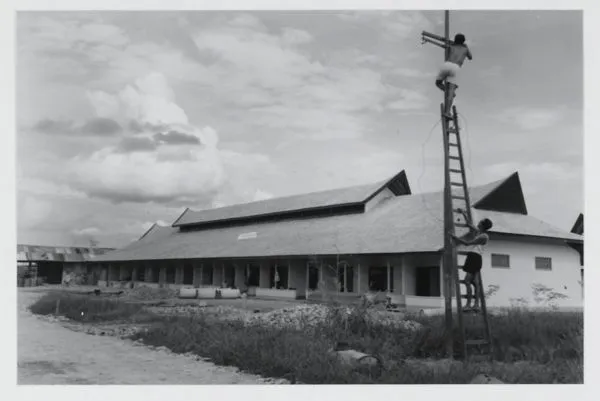
Workers' housing at BPM refinery Pladjoe Palembang, around 1930
Prisoner-of-War Diary of Gordon Stanley Reis
Captured by the Japanese off Sumatra on 18 May 1942 - press-ganged into working at Pladjoe BPM refinery after Japanese occupation of Palembang
BPM Oil Refinery Pladjoe - Palembang
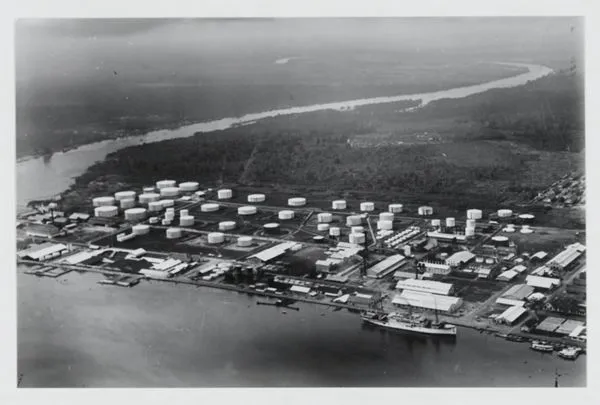
BPM refinery on the Moesi River, Palembang, circa 1930
Duncan Robertson. Singapore 1942
Robertson's account of his wartime experiences including being interned in Palembang and working at Pladjoe