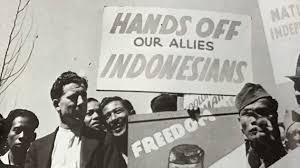
Australian boycott of Dutch shipping
The Black Armada was the name given to the campaign by Australian waterside workers, seamen and trade unions who, between 1945 and 1949, refused to load or service Dutch ships in support of Indonesian independence. This archive brings together contemporary newspaper reports documenting the boycott, union bans, political debate, diplomatic tensions, and the growing Australian support for the Indonesian Republic. It provides a valuable collection of primary sources for readers and researchers interested in Australian and Southeast Asian history.
Seamen will boycott Dutch ships
Dutch boycott reception
Document topics
Boycott on Dutch Ships
Boycott of Dutch ships
Document topics
Dutch Boycott Stupid
Document topics
Black ban on dutch mercy ships
Dutch Ships Again Black
Black Armada by Rupert Lockwood
The Black Armada: Australia's Boycott of Dutch Ships (1945-1949)
The Black Armada was the name given to the campaign by Australian waterside workers, seamen and trade unions who, between 1945 and 1949, refused to load or service Dutch ships in support of Indonesian independence. This archive brings together contemporary newspaper reports documenting the boycott, the Esperance Bay incident, union bans, political debate, diplomatic tensions, and the growing Australian support for the Indonesian Republic. It provides a valuable collection of primary sources for readers and researchers interested in Australian and Southeast Asian history.