
Indonesian Independence

The Indonesian National Revolution (1945–1949) reshaped Australia's relationship with its nearest Asian neighbour. Australian waterside workers, diplomats and military personnel became involved in events that helped Indonesia achieve independence from Dutch colonial rule, marking a turning point in Australian foreign policy.
WHAT WAS THE "SOCIAL REVOLUTION OF 1946" IN EAST SUMATRA?
An Indonesian historian living at the time of the social revolution explores its social and political background.
Palembang Residential District Z-Sumatra
Details of the reception camp for Dutch and Allied civilians and prisoners of war in Palembang at the end of the war.
Burdens of Proof: Photography and Evidence of Atrocity during the Dutch Military Actions in Indonesia (1945–1950)
This article examines Dutch soldiers’ amateur photographs from the Indonesian National Revolution and their use as evidence of extreme violence. It argues for broader study of photographic archives while considering how Indonesians may view their ancestors as victims, perpetrators or both, and raises ethical questions about the ownership and reproduction of such images.
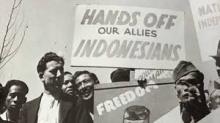
The 'Black Armada' - Australian boycott of Dutch ships in 1945
Beyond the pale: Dutch extreme violence in the Indonesian war of independence 1945-1949
Between 1945 and 1949, Indonesia defended its recently declared independence, and the Netherlands waged its last major colonial war. Much is now
known about this war, but a great deal has also remained unclear or contested. At the end of 2016, the second Rutte cabinet decided to finance a broad-based study on the Dutch military conduct during this conflict. This book presents the conclusions of that study.
Prelude to the Monsoon: Assignment in Sumatra
Through the eyes of young Major Jacobs, a full view emerges of the "boiling cauldron" that was Sumatra in 1945. In spite of the official Allied victory, Jacobs had to attempt to rule Sumatra using the existing Japanese military structure until British relief arrived.
More than the wedding ring
This dissertation examines diverse foreign women who contributed to Indonesia’s formation as an independent nation, often alongside Indonesian leftist husbands. It explores their political and personal motivations, transnational identities, activism, citizenship and sense of belonging within the wider contexts of decolonisation, the Cold War and the Third World.
Challenge to terror
Raymond Westerling’s Challenge to Terror is his account of his military career in the Netherlands East Indies during the Indonesian struggle for independence. It describes his counter-insurgency operations in South Sulawesi and Sumatra, including the controversial methods used by forces under his command against suspected Republican guerrillas. Written from Westerling’s own perspective, the book presents his justification for these methods and his interpretation of the violence and political upheaval surrounding the Indonesian Revolution.
Joris Ivens and the Role of Film in the Indonesian Independence Movement
This article examines how Dutch filmmaker Joris Ivens made the documentary Indonesia Calling in Sydney in 1945–46. The film depicted the boycott by Indonesian seamen and Australian maritime unions of Dutch ships carrying troops and military supplies to Indonesia. It also explores the multinational support for the boycott, the film’s controversial production and its use in promoting the Indonesian struggle for independence.
Revolusi: Indonesia and the birth of the Modern World
David Van Reybrouck’s *Revolusi* traces Indonesia’s struggle for independence from Dutch colonial rule, the Japanese occupation and the revolution of 1945–49. Drawing on extensive research and eyewitness testimony, it places the conflict within the wider history of colonialism, nationalism and global decolonisation.
The civil-military role of the KNIL during the Japanese Occupation and Independence War in the Dutch East Indies from 1942 till 1949
How the civil-military role of the KNIL has changed, and how it affected the Dutch East Indies
Dutch Indies Own No Native Problem
Writing from Batavia in December 1940, E. C. S. Marshall examines relations between the Dutch colonial authorities and the Indigenous population of the Netherlands East Indies. He describes nationalist demands for democratic government, wider education and greater economic opportunity, while arguing that political discontent did not constitute an immediate threat to Dutch rule. The article reflects contemporary colonial attitudes towards Indigenous Indonesians, Eurasians and the Chinese community.
Native Seamen's Strike Creates Police Problem
More than 600 mainly Javanese seamen in Sydney refused to sail their vessels, leading to mass arrests and prosecutions for being absent without leave or disobeying their masters. Many declared that they wanted to return to Java and chose imprisonment rather than comply, with 130 men each fined £10 or sentenced to 20 days in gaol. The dispute caused serious concern about disruption to Netherlands East Indies shipping and required extensive police intervention.
NATIVE RIOTS IN JAVA
The article reports growing unrest in Batavia following Japan's surrender, as Indonesian nationalists demanded an independent republic under Soekarno. Indonesian demonstrators attempted to enter the Tjidang women's internment camp, which was defended jointly by Allied personnel and Japanese guards. The article describes increasing displays of the new Indonesian red-and-white flag, political demonstrations and violence, while Japanese forces remained temporarily responsible for maintaining order.
Black ban on dutch mercy ships
NEI Information Service deny that supplies for the suppression of the Indonesian people were carried aboard Dutch ships in Australian ports.
Communist move - White Australia Policy
The article reports Federal Government concern that Communist supporters were encouraging Indonesian seamen and Australian waterfront unions to refuse work on Dutch ships carrying arms for use against Indonesian nationalists. Ministers portrayed the dispute as part of a broader Communist challenge to the White Australia policy, while unions called for arrested Indonesians to be released and allowed to return home. The boycott was spreading across the waterfront to other maritime trades.
Federal Ministers See Red Bid to Undermine White Australia Policy
The article reports Federal Ministers' claims that Communists were encouraging Indonesian seamen and Australian waterside workers to undermine the White Australia policy. A Communist Party circular urged workers to boycott Dutch ships carrying military supplies, arguing that these would be used to suppress the newly declared Indonesian Republic and restore Dutch colonial rule. The Government resisted pressure to support Indonesian independence and insisted that Indonesian seamen remained prohibited immigrants.
Emotional scenes as Indonesians leave for home on the Esperance
Indonesian dockworkers and seamen who worked in Australia during the war embark on the Esperance Bay to be taken to Java.
Esperance Bay leaves Brisbane
Esperance Bay leaves Brisbane with >1400 Indonesians destined for Java at the end of the war.
Trouble On Esperance Bay Explained
Indonesians aboard Esperance Bay protested when 40 potential leaders were compelled to disembark in Timor rather than Java.
Esperance Bay Enquiry Urged
Faddin demands that Chifley open an inquiry into a mutiny on the Esperance Bay
The Esperance Bay Mutiny - allegations of smuggled arms
Allegations by Daily Mail correspondent that Indonesians smuggled arms on board Esperance Bay.
Esperance Bay 'Double Cross'
Esperance Bay docks at Timor as Mountbatten is unable to ensure safe conduct in Java for 40 activist Indonesians on board despite assurances from Australian government.
Esperance Bay Story Denied
Calwell denies that the Indonesians protest on the Esperance Bay was a mutiny - no lives were in danger.
NO MUTINY ON ESPERANCE BAY
K. Plumb, government minister who travelled on Esperance Bay, denies that a mutiny took place at Timor.
Indonesia calling - Joris Ivens, 1946
Indonesia Calling is a 1946 Australian short documentary film directed by Joris Ivens and produced by the then Waterside Workers' Federation.
Dutch Boycott Stupid
Two Labor members returning from NEI see that the black ban on Dutch shipping is harming Indonesian natives and Dutch civilians.
KOEPANG, TIMOR. 1946-02-17. Freedom movement sympathisers who disembarked from Esperance Bay
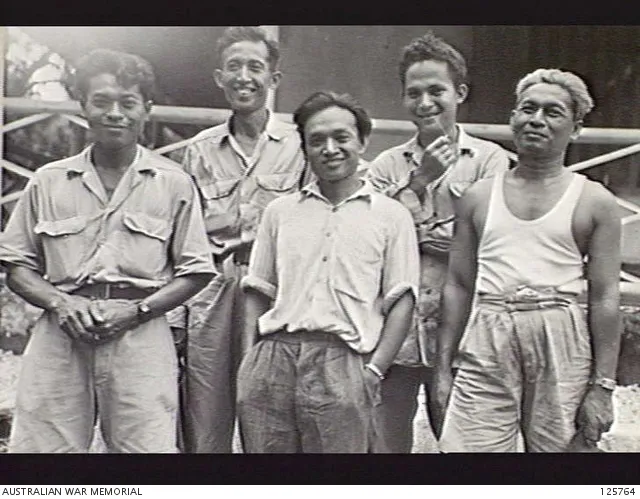
Indonesian nationalists disembarked at Koepang, Timor from SS Esperance Bay
Boycott of Dutch ships - requested to continue
Indonesian premier will not ask Australian unions to lift ban on Dutch shipping until the Netherlands stops the economic blockade of Indonesia
Dutch Ships Again Black
A temporary ban on two Dutch ships imposed in Brisbane and Adelaide.
Boycott on Dutch Ships encouraged to continue
Third Congress of Indonesian Railway Labourers request Australian black ban on Dutch shipping to continue.
Dutch boycott reception
Dutch minister to Australia boycotted reception celebrating third anniversary of founding of Indonesian Republic.
Seamen will boycott Dutch ships
Mass meeting of Seamen's Union in Melbourne vote to continue black ban of Dutch shipping.
Great day for the indonesians
This newspaper article profiles Sutan Sjahrir, the Indonesian nationalist leader and former Prime Minister, following President Sukarno's return to Jogjakarta in July 1949. It examines Sjahrir's role in the Indonesian independence movement, his years of Dutch and Japanese internment, his political philosophy, and his concerns about the negotiations leading to the transfer of sovereignty from the Netherlands to Indonesia.
Dutch Soldiers in Indies: Want to go home
The article describes declining morale among Dutch soldiers fighting in Indonesia, many of whom had served longer than expected and wanted to return home. It recounts the difficulties of combating Republican guerrillas, the isolation and tropical conditions endured by Dutch troops, and their resentment at withdrawing from Jogjakarta as political negotiations moved towards peace.
Ex-commando said to aid terrorists
A report from Bandung announces that former Dutch commando officer Captain Raymond Westerling had taken command of the APRA militia, despite lingering controversy over allegations that troops under his command had killed thousands in South Celebes.
Army defy the State
This report describes Raymond Westerling's demand that the newly formed United States of Indonesia recognise his 20,000-strong APRA militia as Pasundan's official army. It highlights the political tensions surrounding his challenge to the Republican government and fears that his force could spark renewed conflict in West Java.
Threat backed by 'Army'
Australian journalist Denis Warner profiles Raymond Westerling as a feared and enigmatic former Dutch commando whose private army posed a serious threat to the newly independent Indonesian government. The article explores his reputation, alleged military strength and the growing fears that he could trigger renewed conflict in West Java.
Black Armada by Rupert Lockwood
Book review