
Snowy Mountains Hydro-Electric Scheme
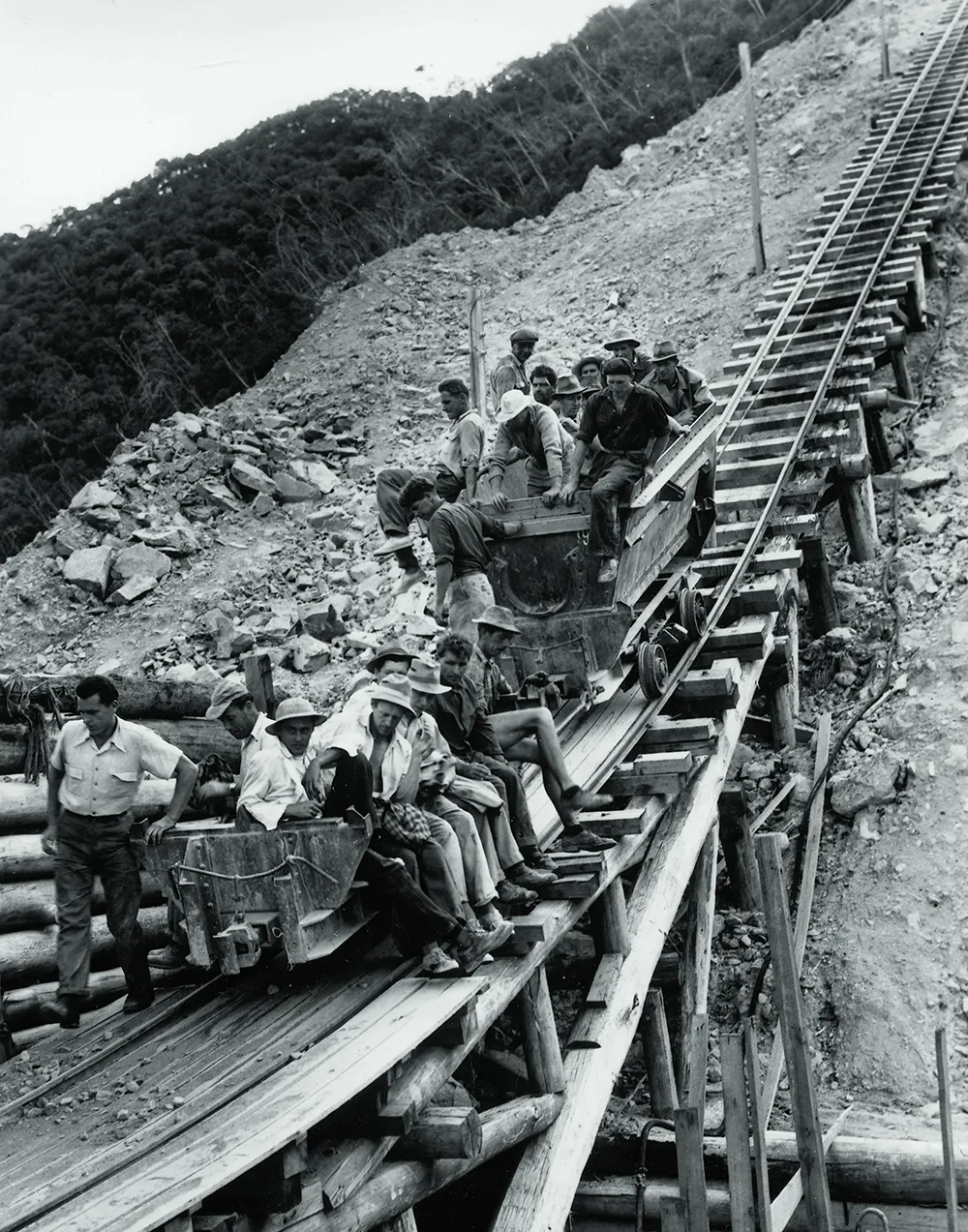
The Snowy Mountains Hydro-electric Scheme was one of Australia’s largest engineering projects. Built between 1949 and 1974, it diverted water through dams, tunnels and power stations to generate electricity and support irrigation. Its multinational workforce also played an important role in post-war migration and the development of modern Australia.
Snowy Hydro - Best of the Years
Documentary produced for the Snowy Mountains Scheme, digitised from a VHS tape that may have been an educational production or sold at a gift shop.
A story of the Snowy Scheme ... of people and their achievements 1949-1974
Produced by the Snowy Mountains Authority at Cooma NSW Australia
Dutch migration and the Snowy Mountains Scheme: work, community and nation building
The Snowy Mountains Hydro-Electric Scheme occupies a central place in Australia’s postwar history. Conceived as a nation-building project, it reshaped Australia’s energy and water systems while simultaneously transforming the country’s demographic profile. Between the late 1940s and the 1970s, the Scheme attracted tens of thousands of workers, the majority of whom were migrants from Europe.
Among them were Dutch migrants who arrived in Australia during the large postwar migration wave of the 1950s. Although never organised as a distinct national contingent, Dutch workers formed a visible and active part of the Snowy workforce and the communities that developed around it. Their involvement illustrates how Dutch migration combined labour, social life and long-term settlement in Australia.
Selling the Snowy: The Snowy Mountains Scheme and National Mythmaking
Author explores the role of national mythmaking behind the Snowy Mountains Scheme as an icon of technological, economic progress and multiculturalism in Australia.
Snowy Mountains Scheme 1956-1958 Place Family Experience
Snowy Mountains Scheme video looks at an Australian family's experiences in living in Kenny's Knob a remote construction camp providing labour for the Tumut 1 tunnel and power station. Aubrey Place was the accountant for the French Consortium Etudes et Enterprises and his wife Nancy Place was the Post Mistress for the camp of 950 migrant men and 50 women and children.
Snowy Mountains Scheme Guthega Project
This video provided by Aage Stavdal, the author of 'A Boy From Sauda, Norway' captures the story of a construction company contracted from Norway to build the first stage of the Mighty Snowy Mountains Hydro-Electric Scheme in Guthega Australia
Snowy Mountains Hydro Scheme
The Snowy Mountains Scheme was the biggest public works engineering scheme ever undertaken in Australia using over 100,000 people from more than 30 countries. It created the first truly diverse and multicultural workforce Australia had seen.
- Evidence of former Axis soldiers marching on Anzac Day 2:10