
Primary Sources
Search a collection of original newspapers, documents, photographs, audio recordings and video used in researching the Becoming Australia series.
To browse all historical resources by subject, including articles, books, blogs and primary sources, visit Historical Topics.
Dr Ashburton Thompson Interviewed
Dr. Ashburton Thompson reassured the public that there was no immediate cause for panic, explaining that bubonic plague was less contagious than commonly believed and that effective precautions were being taken. While he believed the disease would eventually reach Australia, he was confident that prompt public health measures could prevent it from becoming established in Sydney.
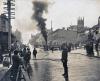
Cleansing of the streets in The Rocks
Firemen cleansing the streets, washing arsenic solution into the sewers (and into Sydney Harbour).
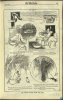
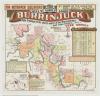
Burrinjuck - sale of surplus lands
Sale of surplus lands in Burrinjuck with frontage to the stored waters of the Murrumbidgee and Yass Rivers
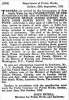
The original call for tenders in 1921
Kathleen Butler, Godmother of the bridge
On the appointment of Butler as secretary and clerk to Bradfield. Bradfield designed the specifications for the Sydney Harbour Bridge tender process but Butler did the rest.
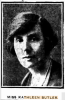
Kathleen Butler's clerical work connected with the bridge
Butler's knowledge of the bridge's technical details comparable to the chief engineer and tenderers
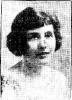
John Bradfield, Richard Ball (Minister for Works and Railways) and Kathleen Butler depicted in a bridge chord section.
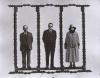
Richard Ball (Minister for Trains and Works) signs the contract with Doorman, Long & Co in his office watch by John Bradfield (left) and Kathleen Butler (centre) on 24 March 1924
Miss Kathleen Butler, leaving for England
Butler visits her sister in Lithgow before departing for England on the Ormonde
Kathleen Butler on the Ormonde
Butler onboard the SS Ormonde ready for departure from Sydney for London.
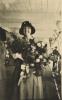
Miss Kathleen Butler, a social gathering
Kathleen Butler celebrates her home-coming from England with her family
Miss Butler, Luncheon by PWWA
Kathleen Butler is a special guest to a luncheon hosted by Professlonal Women Workers' Association for state public servants on her return from England.
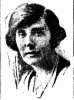
Kelly back on the Bridge
This newspaper article describes Vincent Roy Kelly's return to work on the Sydney Harbour Bridge following his remarkable survival after a 175-foot fall. It highlights the public attention surrounding his recovery and Kelly's own calm, unassuming determination to resume work as though nothing had happened.
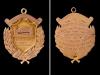
Sydney Harbour Bridge survival medal
This medal was awarded to Vincent Kelly who survived falling from the Sydney Harbour Bridge while working on its construction in October 1930.
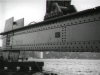
A view of the main bearing and arch ribs shows the two sides of the cantilever arches almost meeting. The bottom chord of one of the bridge panels is erected, weighing 61 tonnes. The panel is lifted by crane and a worker can be seen standing on it. Workmen rivet a chord joint. The panel is lifted.
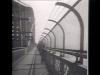
Men inspecting the construction of the safety fence at Sydney Harbour Bridge
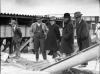
The Sydney Harbour Bridge footway and safety fence. October 1935
Mourning Day - 150th anniversary of white settlement
President of Aborigines' Progressive Association mourns current plight of Aboriginals and demands ordinary citizens' rights to old age pensions, maternity bonus, work and education.
Holland. Rotterdam. May 12
A wartime report on the German invasion of the Netherlands in May 1940, including Dutch claims of an orderly military withdrawal, fighting around Rotterdam and continued Allied support. The article also reports allegations that German forces used nerve gas to capture a fort on Belgium’s Albert Canal.
Dutch Indies Own No Native Problem
Writing from Batavia in December 1940, E. C. S. Marshall examines relations between the Dutch colonial authorities and the Indigenous population of the Netherlands East Indies. He describes nationalist demands for democratic government, wider education and greater economic opportunity, while arguing that political discontent did not constitute an immediate threat to Dutch rule. The article reflects contemporary colonial attitudes towards Indigenous Indonesians, Eurasians and the Chinese community.
Gift of Tea for the Dutch, Delivered by the R.A.F.
In April 1941, the RAF dropped 75,000 one-ounce packets of tea over the occupied Netherlands. Donated by Dutch East Indies tea planters, the packets carried the Netherlands flag and an encouraging message from the free Netherlands Indies to the Dutch people.
MAGNA CARTA OF 1941
The article welcomes the **Atlantic Charter of 1941**, agreed by Winston Churchill and Franklin D. Roosevelt, as a major statement of Anglo-American war aims and principles for the post-war world. It emphasises continued American support for Britain, international economic co-operation, improved living and labour standards, disarmament of aggressor nations and opposition to territorial conquest. The article also stresses the Charter's relevance to Japanese expansion in the Far East and presents it as the basis for closer British, American and Russian co-operation against the Axis powers.