
Primary Sources
Search a collection of original newspapers, documents, photographs, audio recordings and video used in researching the Becoming Australia series.
To browse all historical resources by subject, including articles, books, blogs and primary sources, visit Historical Topics.
Army defy the State
This report describes Raymond Westerling's demand that the newly formed United States of Indonesia recognise his 20,000-strong APRA militia as Pasundan's official army. It highlights the political tensions surrounding his challenge to the Republican government and fears that his force could spark renewed conflict in West Java.
Threat backed by 'Army'
Australian journalist Denis Warner profiles Raymond Westerling as a feared and enigmatic former Dutch commando whose private army posed a serious threat to the newly independent Indonesian government. The article explores his reputation, alleged military strength and the growing fears that he could trigger renewed conflict in West Java.
Fate of Jindabyne and Adaminaby
The article reports on discussions between Snowy River Shire Council representatives and William Hudson, Commissioner of the Snowy Mountains Hydro-Electric Authority, concerning the proposed flooding of Jindabyne and Adaminaby as part of the Snowy Mountains Scheme. Hudson assured councillors that affected residents would be consulted before decisions were made about their relocation and the establishment of new townships, and that they would receive fair treatment. He explained that the Authority's immediate priorities were establishing accommodation for workers, developing electricity generation and commencing tunnel construction, with detailed planning for the relocation of the towns to follow.
Westerling Gains His Freedom
The newspaper article reports the departure of Raymond "Turko" Westerling from Singapore for England after Indonesia's attempt to extradite him failed. The article explains that the Singapore Supreme Court ruled the Anglo-Netherlands Extradition Treaty did not apply to the newly independent Republic of Indonesia, leading to his release and deportation. It also notes that Westerling had received lucrative offers for his life story and film rights, highlighting the international publicity surrounding his controversial career.
Jindabyne Will Die With a Fat Purse
The article describes the transformation of Jindabyne during the early construction of the Snowy Mountains Hydro-Electric Scheme and the town's impending destruction beneath a new reservoir. The arrival of thousands of workers, including European migrants, brought unprecedented prosperity to local businesses, despite uncertainty about the town's future. It recounts Jindabyne's early history, changing social life, housing and supply difficulties, and plans for a replacement township. Residents were concerned about compensation, relocation and preserving the town's identity. The article captures the contrast between the economic opportunities created by the Snowy Scheme and the loss of a long-established rural community.
BUSH NURSING ASSOCIATION
The article reports on the activities of the Bush Nursing Association in Briggsvale-Cascade, Ebor and Jindabyne during the year ending 30 June 1951. It provides statistics on patient numbers, nursing visits, consultations, maternity care, immunisations and travel undertaken by bush nurses. The figures illustrate the importance of nursing services in isolated rural communities, particularly Jindabyne, where Sister E. Passmore reported attending 2,865 patients. The article also highlights the financial pressures facing bush nursing centres, contrasting deficits at Briggsvale-Cascade and Ebor with Jindabyne's healthy financial position.
New Jindabyne
A 1952 newspaper article reports that construction of New Jindabyne had already begun, three or four miles from the original township, which was destined to be submerged by the Snowy Mountains Scheme.
Of the 16 houses planned for Commission staff, 10 had already been erected. Streets had been planned and named, and the houses were equipped with electricity, running water and sewerage.
The buccaneer hid in a hole in the floor
The TIME magazine article recounts the dramatic capture of Captain Raymond "Turk" Westerling at a country house near Amsterdam after Dutch police discovered him hiding beneath the floorboards. It outlines his role in leading an anti-Indonesian guerrilla force following Dutch recognition of Indonesian independence, his years as a fugitive, and the surprising decision of a Dutch magistrate to release him despite government efforts to keep him in custody.

SYDNEY'S BREAD NEEDN'T BE BAD
The article examines widespread dissatisfaction with the quality of bread in New South Wales during the 1950s, attributing problems to mechanisation, the concentration of bakeries into large combines and pressure for faster production. It highlights inadequate government regulation, the absence of minimum bread quality standards and proposals to improve nutritional value through the addition of skim milk powder. The article provides an insight into everyday food consumption, household concerns and the changing baking industry in post-war Australia.
Irrigation and Power from Snowy Mountains
In this letter to the Border Morning Mail, Commissioner Hudson explains the relationship between hydro-electric power generation and irrigation in the Snowy Mountains Scheme. He argues that the scheme was designed primarily to meet peak electricity demand, complementing coal-fired power stations supplying base-load power. He rejects suggestions that electricity generation would be governed by irrigation requirements, explaining that water discharged from the power stations would be stored in reservoirs for subsequent release as required by irrigators. The scheme was therefore intended to serve both electricity generation and irrigation without compromising either purpose.
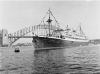
The migrant ship Johan Van Oldenbarnevelt on its last migrant voyage in 1958.
This silent footage takes us back to 1964 and shows 3803 doing what it was designed to do best – travel at speed. It's hauling one of the premier passenger trains of the day, the Riverina Express.
Full rights for Aborigines and Torres Strait Islanders
An Australian Communist Party description of the historical and systemic issues contributing to the 'Aboriginal problem'.
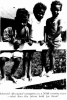
An excerpt from the series This is Your Life, hosted by Roger Climpson with Vivian Bullwinkel.

Vivian Bullwinkel interviewed by John Clements on ABC radio 1980
Documentary made for the Department of Veteran's Affairs - Vivian Bullwinkel discusses her experiences in being transferred from one camp to another.

An interview with Vincent Kelly – a rivetor during the building of the Harbour Bridge and the man who fell from the highest point and survived in 1930.